Why spinach processing is difficult
Spinach is one of the most demanding products in vegetable processing. It looks simple from a distance, but in practice it combines three separate challenges that often collide with each other: contamination by sand and small stones, contamination by insects, and a leaf structure that is easy to bruise, tear or compact when the process is too aggressive.
That is exactly why many spinach projects underperform. Processors sometimes expect one washing stage to solve everything. In reality, clean and stable spinach output usually comes from a sequence of correctly chosen stages. Dry contamination should be reduced before water does the heavy work, leaf clusters should be separated before they enter a washer, and insect removal should happen without creating unnecessary damage or water overload. When the line architecture is wrong, the cost is not only visible in quality claims. It appears in higher water use, unstable output, harder sanitation and more maintenance interventions.
A strong spinach process begins with identifying what kind of contamination load the product really carries. Some facilities fight mainly sand and soil. Others see a major insect problem, especially when raw material arrives with more field residue or denser leaf clusters. A third group struggles most with leaf integrity because the downstream process demands a visually consistent and gently handled product.
Think in line architecture, not isolated machines
The best comparison between suppliers is not which washer is strongest. The better question is which combination of cleaning, separation and washing stages fits your product, your target quality and your downstream line.
In many real-world cases, the smartest approach is to remove as much unwanted material as possible before the product enters an intensive water step. That reduces the burden on the washer, lowers recirculating contamination and makes the whole line easier to stabilize over long runs.
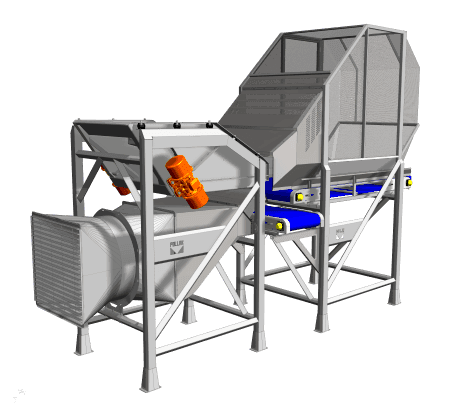
In a well-structured spinach line, dry cleaning is often the first meaningful intervention. A dry cleaning drum can remove smaller hard particles and part of the unwanted field residue before the leaves move forward. Every particle removed before washing is a particle that does not keep circulating through water, pumps and downstream equipment. For processors dealing with heavy field contamination, that first step can make the difference between a line that merely works and a line that stays predictable throughout a shift.
Separate leaves before washing
After dry cleaning, leaf separation becomes critical. Spinach does not enter a line as perfectly individual leaves. It often comes in clusters, overlaps and uneven masses. If those clusters stay together, contamination hides inside them and washing efficiency drops.
This is where air separation and controlled vibration play a much bigger role than many buyers expect. A wind selector that separates leaves properly and removes heavy particles creates much better conditions for washing. It improves product presentation before washing, but more importantly it improves what the washer can actually reach.
Make washing effective without damaging the leaf
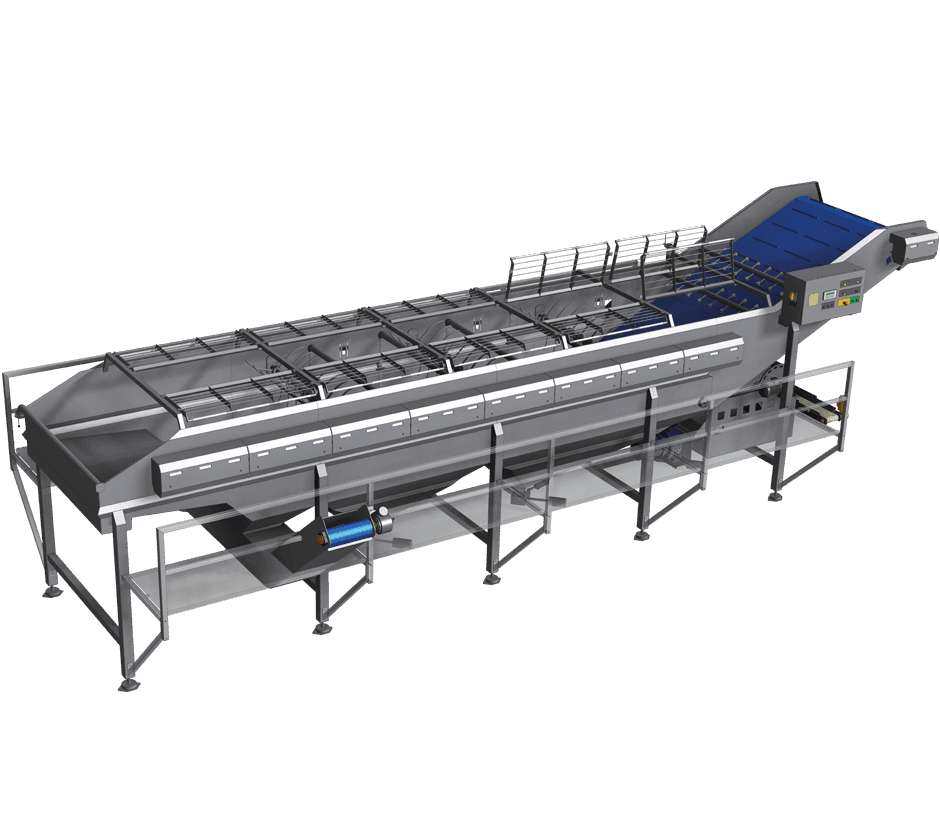
Only after those preparation stages does the washing step deliver its full value. Gentle but effective washing depends on turnover, residence time and product flow, not only on water volume. A spinach washer designed with enough paddles and the right movement profile can turn the leaves deeply enough to release contamination while still protecting the structure of the product.
If insect pressure is high, an insect-removing drum or comparable specialist feature becomes especially valuable, because insects often behave differently from sand and require a different kind of separation logic.
This is the point where many processors make expensive mistakes. They compare two washers by looking at headline capacity and machine footprint, but they do not ask how the product behaves inside the machine, how leaf clusters are opened, how insects are separated, how sanitation is handled or how the washer fits into the full sequence before and after it. In spinach processing, the line matters more than the isolated machine. The supplier who thinks in sequences usually creates a more stable result than the supplier who sells one machine at a time.
Connect cleaning to downstream quality
Downstream integration is just as important as upstream preparation. If the spinach is moving into blanching, cooling, freezing or another thermal stage, the cleaning line has to deliver a product that flows consistently and predictably.
That means the process design should reduce contamination without overloading the next section with water, debris or damaged material. A well-integrated blancher-cooler does not simply sit at the end of the line as an independent module. It becomes part of the overall quality strategy, especially where processors need stable product behavior after cleaning.
Questions buyers should ask
For buyers evaluating proposals, the most valuable supplier conversations are usually the most practical ones. A good supplier should ask about product origin, contamination level, expected throughput, target output, downstream process, sanitation routine and service expectations.
A good buyer should ask how the line behaves when field quality changes, how quickly settings can be adapted, how remote diagnostics work, how wear parts are handled and what spare-parts logic exists for critical modules. These questions reveal whether the proposal is a brochure exercise or a genuine process solution.
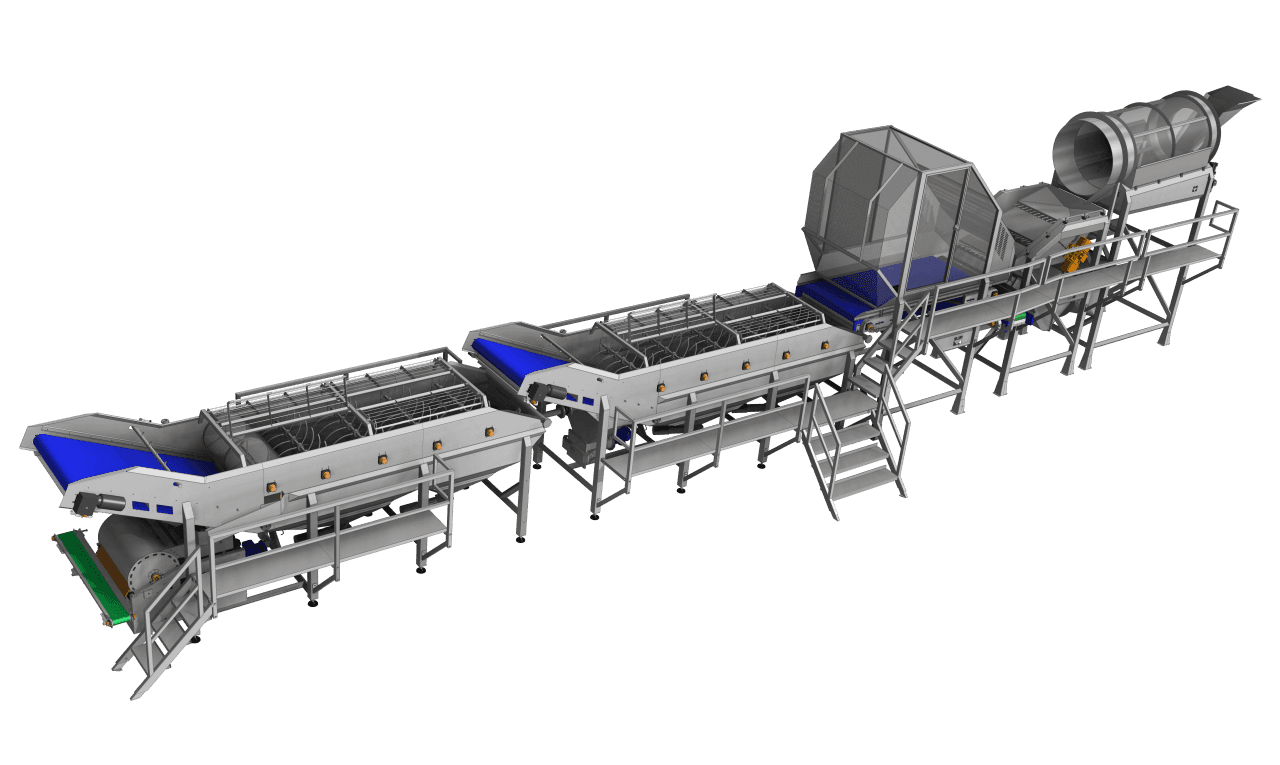
POLLÁK ŠAĽA's spinach offering is strong precisely because it can be discussed as a complete processing architecture, not only as a list of standalone machines. The spinach processing line can combine a dry cleaning drum, a wind selector, a dedicated spinach washer and a blancher-cooler into one coherent logic. For a processor, the real value of a line is not the number of machines in it. The real value is how clearly each stage solves a specific problem without creating a new one for the next stage.
If your operation is comparing new suppliers, expanding capacity or trying to fix one weak section inside an existing line, the safest path is to evaluate spinach processing as a system. Start with contamination type, move through separation and washing logic, then confirm hygiene, serviceability and downstream fit. That sequence protects product quality, supports more stable uptime and reduces the risk of buying a technically impressive machine that is wrong for your real process.