Look beyond headline capacity
In sweet corn production, the cutter is one of the clearest dividing lines between a line that looks efficient and a line that truly performs. A machine can have impressive capacity figures, but if it struggles with variable cob size, loses yield, creates too many jams or makes knife management difficult, the real cost shows up quickly in waste, downtime and operator frustration.
Choosing an automatic sweet corn cutter should never be reduced to speed alone. The better evaluation starts with the realities of industrial production: how reliably the machine orients cobs, how it handles irregular raw material, how precisely it protects kernel yield, how fast it recovers from disruptions and how well it fits into the rest of the line. These are the details that decide whether the cutter becomes a strength in the process or the section everyone works around.
Start with cob orientation
Sweet corn does not arrive in perfectly identical shape, diameter or length. Any cutter that depends on stable feeding but cannot intelligently read cob size and orientation will sooner or later push variability downstream as waste, poor cutting consistency or more manual intervention.
Modern processors should pay close attention to how the machine identifies each cob, how it rejects cobs that fall outside the target range and how it adapts when raw material quality changes during the shift.
Camera-based logic changes the conversation. A system that detects size, shape and orientation before cutting gives the processor much more control over output quality and machine stability. It also creates a more honest way to think about capacity. In real production, the best machine is not the one with the largest number in a brochure. It is the one that maintains high useful throughput when the incoming product is inconsistent. That difference matters even more when the line runs long campaigns and cannot afford constant intervention.
Protect yield and manage knives properly
Another key area is yield protection. Buyers often focus on the cutting head only after they experience problems, but by then the cost is already built into the process.
A cutter should be evaluated by how consistently it removes kernels without excessive scalping, how well it manages shorter or narrower cobs, how easily parameters can be tuned and how repeatable the results are when product conditions move away from the ideal. A machine that keeps acceptable yield only on very uniform raw material is not a robust industrial solution.
Knife condition is part of this same story. A cutter is only as stable as its knife management routine. If sharpening is awkward, slow or poorly controlled, quality drifts and maintenance becomes reactive instead of planned. Professional buyers should treat the sharpening workflow as part of the cutter decision, not as an afterthought. The right cutter ecosystem includes a clear maintenance rhythm, reliable access to knife-related spare parts and a sharpening setup that keeps geometry consistent over time.
Downtime behavior matters all day
Many processors underestimate how costly small interruptions become when they repeat all day. A cutter that removes jammed cobs automatically, gives useful diagnostics and allows quick adjustment of speed and settings has a meaningful operational advantage over a machine that forces staff to solve every irregularity by hand. Uptime is not only about robust mechanics. It is also about how intelligently the machine communicates, reacts and recovers.
Electric drive architecture matters more than it may first appear. A fully electric cutter avoids some of the complexity associated with hydraulic systems, supports cleaner control logic and often makes diagnostics, upgrades and remote support easier to manage. For industrial buyers, these are not abstract engineering preferences. They translate directly into easier maintenance, clearer troubleshooting and better long-run predictability.
Evaluate the cutter inside the line
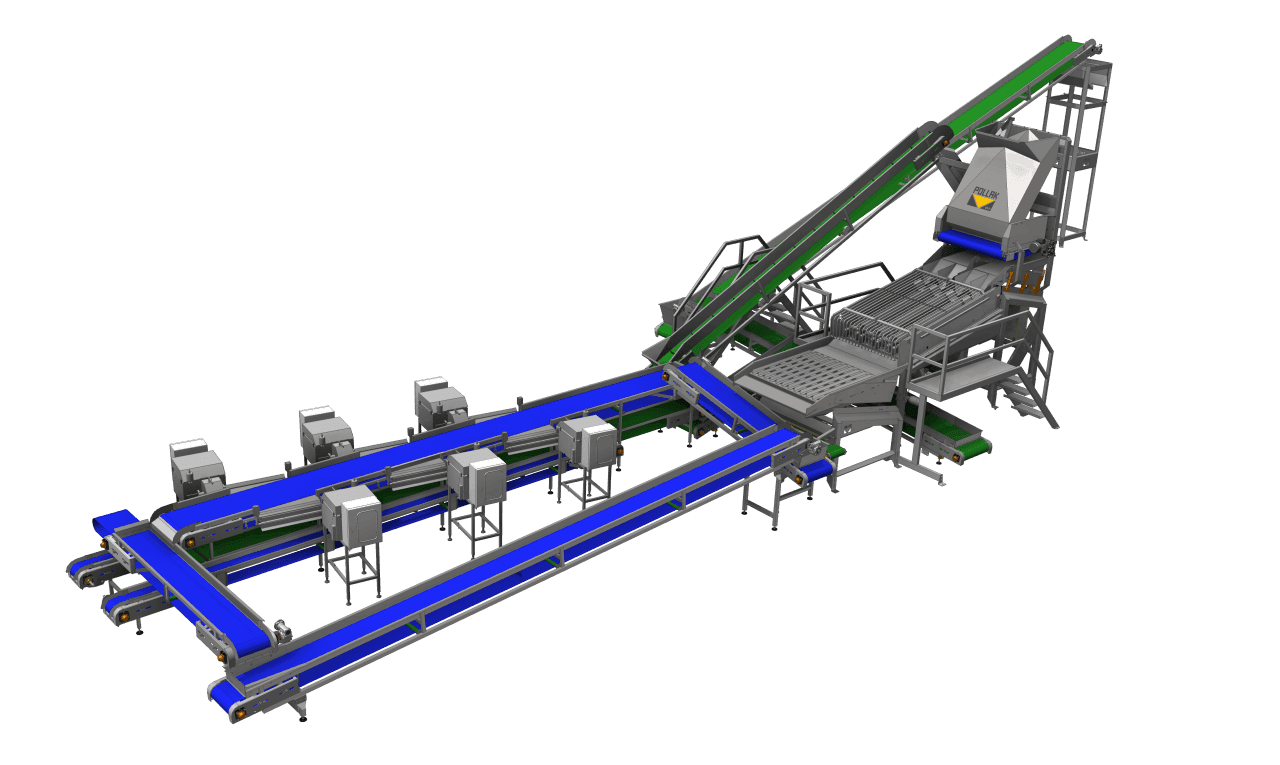
A sweet corn cutter is not purchased in isolation. It sits between other critical stages, especially husking, sorting, washing and thermal treatment. If upstream feeding is unstable, downstream washing is overloaded or the cutter is poorly matched to the husker's output, overall line performance suffers even when the cutter itself is technically capable.
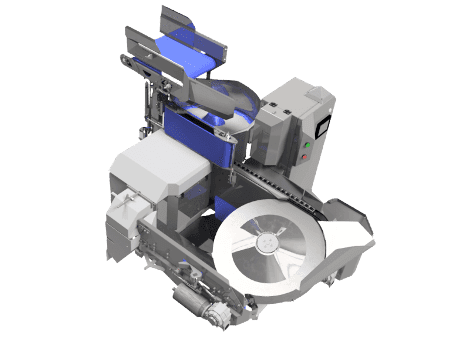
POLLÁK ŠAĽA's advantage in this area is that the automatic cutter can be evaluated within a wider sweet corn ecosystem. The CC-A2 CornMaster can be connected conceptually and operationally to the CornHusk husker, the CornSorter optical sorter, the KnifeSharper sharpening machine and the broader sweet corn processing line. For the buyer, that creates a more complete decision frame. You are not simply choosing a cutter. You are choosing how the cutter will behave in a production environment that includes raw-material variability, maintenance needs and downstream quality targets.
A practical procurement checklist
A practical procurement checklist should include six clear questions. First, how does the machine orient and reject non-standard cobs. Second, how does it protect yield under changing raw-material conditions. Third, how does it deal with jams and interruptions.
Fourth, how are knives maintained, sharpened and replaced. Fifth, what diagnostic visibility does it provide to operators and maintenance teams. Sixth, how well is it matched to the rest of the line.
When those six questions are answered well, buyers move away from brochure comparison and toward real production logic. That is where better investment decisions are made. The strongest cutter is not necessarily the most dramatic machine on the page. It is the one that protects useful output, keeps maintenance under control and supports stable industrial production day after day.